What Is Intelligence? Rethinking IQ in the Age of AI
What actually is intelligence — and what happens to our sense of it now that machines can do the thinking for us?
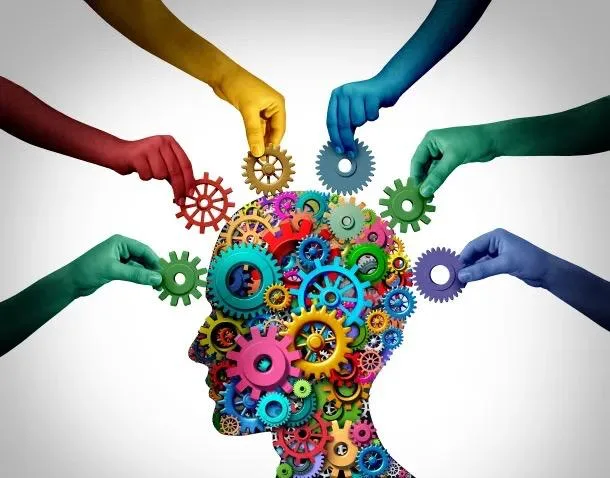
With Artificial Intelligence now woven into everyday life, I’ve found myself returning to a question that used to feel abstract and now feels urgent: what actually is intelligence — and what happens to our sense of it now that machines can do the thinking for us?
The Problem With IQ
Most of us know the standard measure of intelligence: IQ. It’s what Western society has long used to decide who’s “smart” — how well someone reasons logically and analytically. The test was developed about 120 years ago to identify schoolchildren who needed extra academic support, and it became institutionalized during WWII as a way to screen for cognitive capability.
In my late teens, I struggled with what society told me intelligence and success were supposed to look like: a high-paying job, a big house, fancy cars, private planes. Prestige and achievement as proof you’d “made it.” From close, first-hand exposure to that kind of material wealth, I felt strongly it was incomplete. An internal voice kept telling me: this can’t be it.
Beyond IQ: Emotional and Multiple Intelligences
In 1995, Daniel Goleman published Emotional Intelligence: Why It Can Matter More Than IQ. It hit home immediately — my academic, logical, analytical skills were never particularly impressive, and I was already questioning the standard. Goleman argued that self-awareness, self-regulation, motivation, empathy, and social skill are just as valuable as pure logical reasoning — categories the traditional model left out entirely.
Later I came across Howard Gardner’s Frames of Mind: The Theory of Multiple Intelligences (1983). Gardner originally proposed seven intelligences: linguistic, logical-mathematical, spatial, bodily-kinesthetic, musical, interpersonal, and intrapersonal. He later added two more:
- Naturalistic intelligence — the skill of identifying and classifying elements of the natural world, and understanding how they affect us. Suddenly, my years spent with shamans in the high Andes felt like they held real value — knowledge I knew I’d eventually want to pass on.
- Existential/spiritual intelligence — the capacity to sit with the big questions of existence and meaning.
For the first time, someone was naming forms of intelligence outside the mainstream academic model — ones I actually recognized in myself.
How This Shows Up in Our Teaching
At 5 Elements Wisdom Academy, these ideas aren’t just theory — they’re the architecture of what we teach:
- Bodily-kinesthetic intelligence (Self-Mastery) — built through the pillars of Yin Yoga and Chinese Medicine.
- Interpersonal intelligence — understanding and “reading” other people: their moods, strengths, weaknesses, the cues in facial and body language, building rapport, leading and teaching groups. This is essential to becoming a skillful, ethical, authentic Yin Yoga teacher — which is why Daoist Face Reading is part of our curriculum. It’s an invaluable tool for knowing both ourselves and each other more deeply.
- Intrapersonal intelligence (“Know Thyself”) — self-awareness, reflection, emotional self-regulation, and comfort with introspection and solitude. Our meditation and breathing techniques sit at the core of this.
- Naturalistic intelligence — the center of everything we teach. Recognizing the Five Elements within and around us, the cyclical nature of things, their patterns and fluctuations across the physical, emotional, and spiritual layers of existence.
- Existential/spiritual intelligence — the exploration of why we’re here, our place in the cosmos, why suffering exists, and learning to sit comfortably with questions that don’t have a finite, resolute answer. This is the heart of Daoist philosophy: the inquiry into the nature of existence itself.
Where AI Fits Into All This
Artificial Intelligence is now a massive part of our reality. The people driving that train openly admit they can’t fully grasp where it’s headed. We’re told it will bring progress through innovation, and that “super intelligence” isn’t far off — all delivered by Silicon Valley’s billion-dollar investments, feeding us fast dopamine hits with little concern for our wellbeing. The result: a huge segment of the population glued to their phones, swiping, with less and less attention span for something as sustained as reading a book.
Sit with that for a moment — longer than the blink of an eye.
I’d argue critical thinking is now more essential than ever: the ability to navigate the flood of information (and disinformation) coming at us, and the discernment to keep asking questions in a world where AI can hand us answers in seconds.
Pause, Breathe, Be — A Human Superpower
Which brings me back to the original question: what is intelligence, and what does it mean to be human, now that artificial intelligence is reshaping the fabric of our lives?
At our school, we advocate for the softer, Yin qualities — like simply being — in a culture that insists achievement through doing (a Yang quality) is the only way to create value in our lives. We don’t buy into that. A balanced life needs both. After all, we’re not Human Doings. We’re Human Beings.
The Daoist virtues — kindness, compassion, empathy, being in service — stripped of dogma and religious framing, offered to all of humanity regardless of ethnicity, race, or skin color — are a way of moving through the world that brings unity. And they’re reserved for humans. A machine can simulate these qualities. It cannot embody them.
What True Intelligence Might Actually Be
I’d suggest that true intelligence is creating the life we actually want to live — one you don’t want to retire from. Something with meaning, joy, and purpose. I’ve worked with more clients than I can count who had high IQs, high-paying corporate jobs, and by every conventional measure were “making it” — while living stressed, miserable lives, caught in an illusion of what happiness was supposed to look like.
If This Resonates With You
If the softer qualities of Yin Yoga speak to you. If self-mastery intrigues you. If Naturalistic Intelligence through the Five Elements of Nature feels worth exploring. If emotional, existential, or spiritual intelligence resonates on a deeper level —
Our Yin Yoga & Chinese Medicine 150-Hour Training might be exactly the medicine you’re looking for.
What we hear again and again from former students: “I came to become a Yin Yoga teacher, but left with a deeper sense of belonging, a clearer knowledge of myself, and a real understanding of my interconnectedness with Nature. This was so much more than a Yin Yoga teacher training.”
May all be well, and live happy, healthy, prosperous lives. Tobias & Marcela — 5 Elements Wisdom Academy